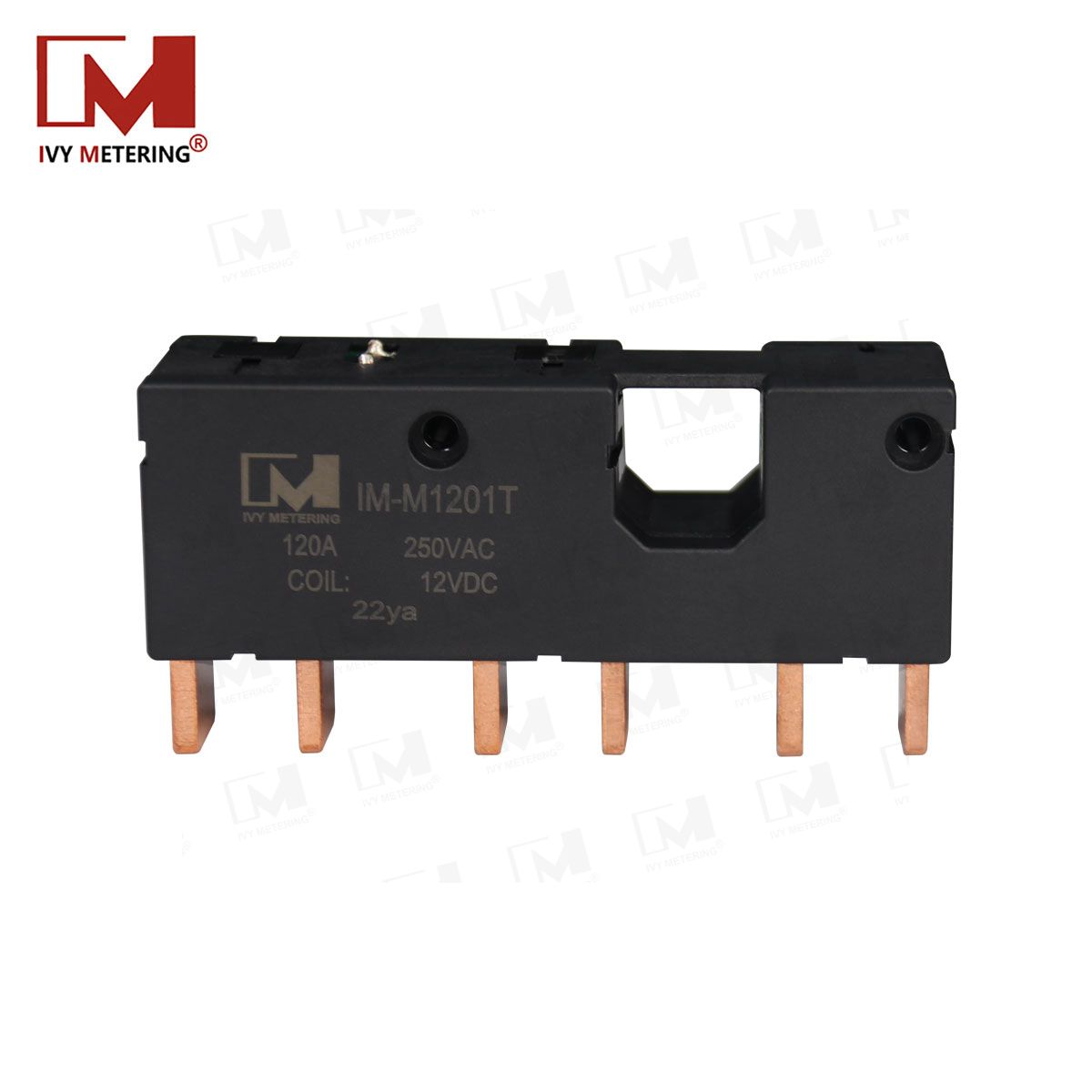
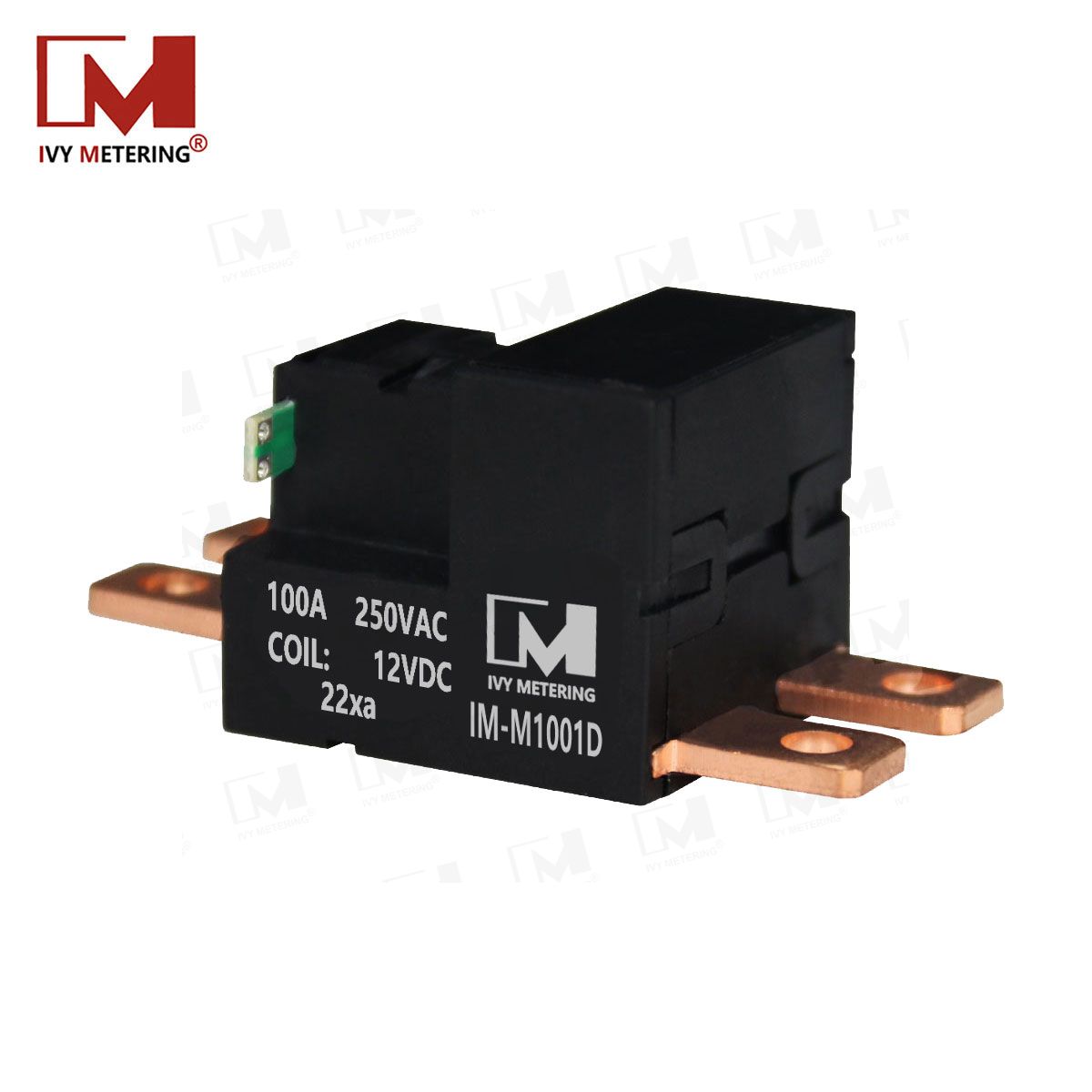
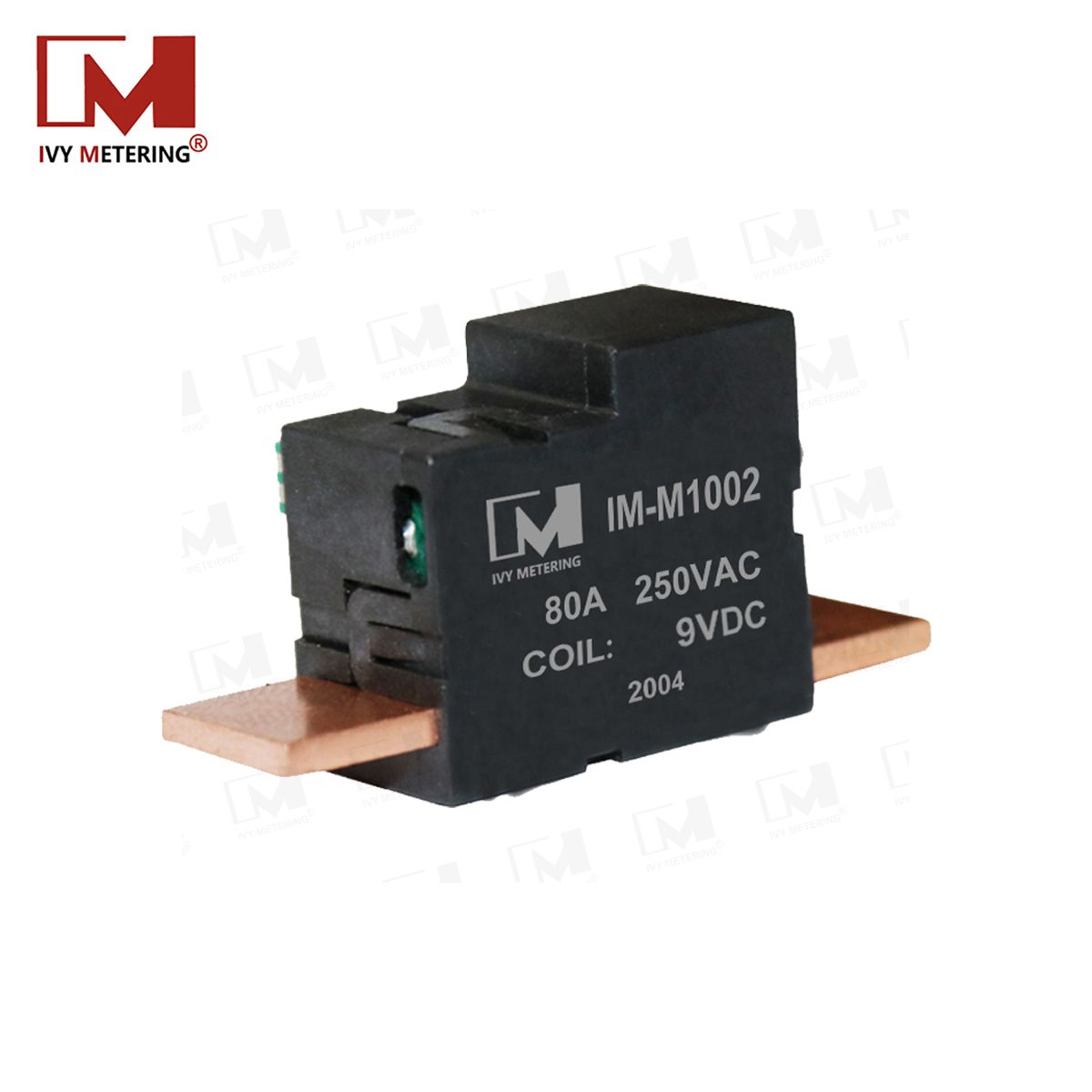
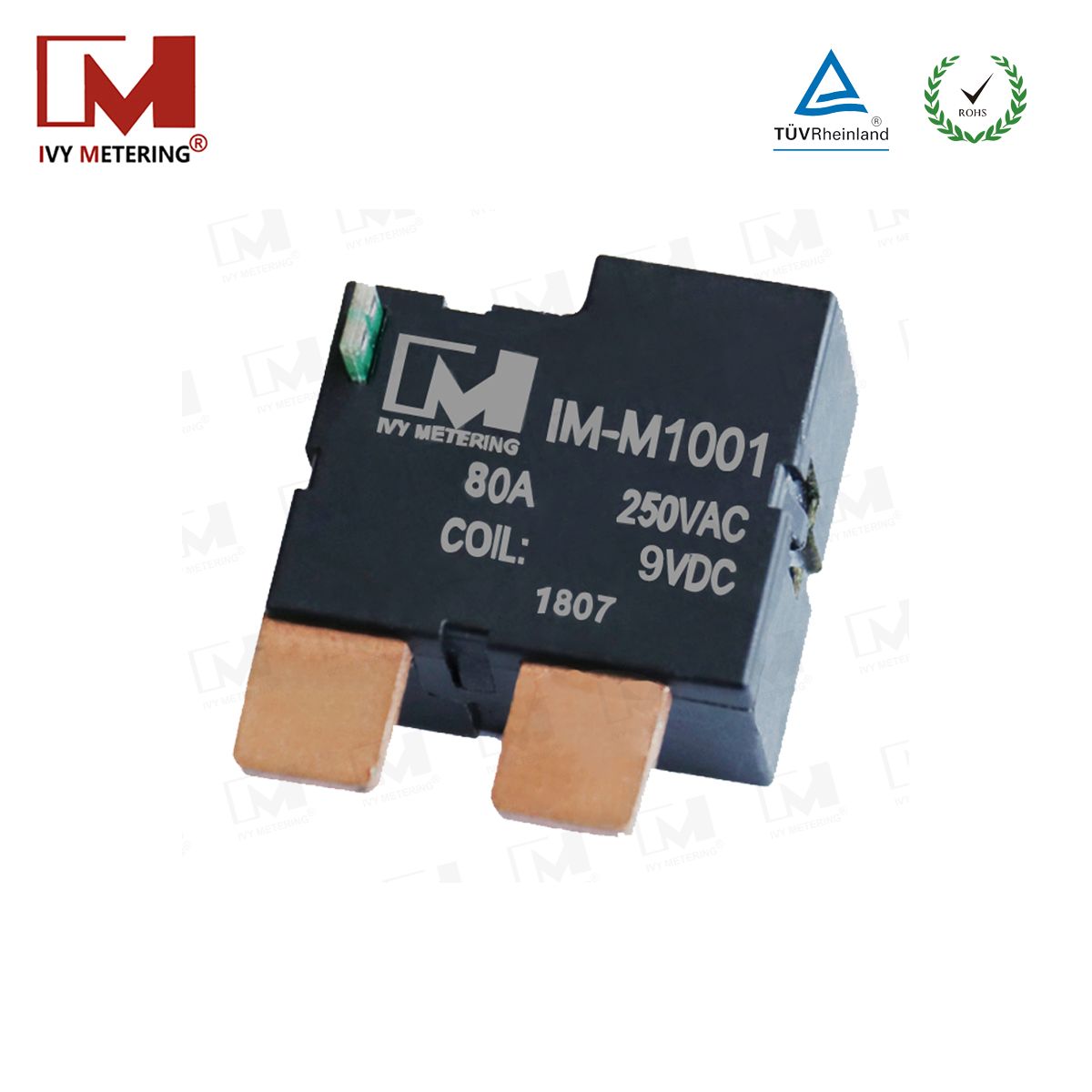
IM-M1001D 100A Miniature 2-Pole Solar Latching Relay
● Max.Switching Current:100A
● Permanent Magnetic Immunity to 500 mT
● Two Poles Contact; Contact Form:2A/2B
● Small Size; Compact Design of 29*24.5*27.1mm
● Anti-surge 6kA, Dielectric Strength 4kV(Pole to Pole)
●IEC62055-31 UC2 Certificate Pending
IM-M1001D Product Overview
The IVY IM-M1001D is a miniature 2-pole latching relay for high-current electrical switching applications. Its published specifications include a maximum switching current of 100A, a 250VAC rating, a 12V coil, a 2A/2B contact configuration and magnetic immunity specified at 500mT. With dimensions of approximately 29 × 24.5 × 27.1 mm, the relay is designed for compact equipment integration. Potential applications include solar power equipment, energy metering systems and electrical control assemblies, subject to verification of the operating conditions and applicable standards.
Manufacturer: IVY
Model: IM-M1001D
Product category: Miniature 2-pole latching relay
Key selection factors: Switching ratings, coil-control requirements, contact configuration, magnetic immunity and application compliance
Technical information: Contact IVY for the official datasheet and quotation.
IM-M1001D 100A Miniature 2-Pole Solar Latching Relay
The IVY IM-M1001D is a miniature high-current latching relay designed for electrical switching applications that require a compact form factor and resistance to external magnetic fields. With a maximum switching current of 100A, a 250VAC rating, a 12V coil and specified magnetic immunity of 500mT, it is designed for consideration in solar power equipment, energy metering systems and other electrical control applications, subject to the verified operating specifications.
For European equipment manufacturers, relay selection involves more than current and voltage ratings. Contact configuration, coil control, switching duty, thermal performance and the electromagnetic environment must also be considered. The IM-M1001D provides a compact option for OEM engineers evaluating high-current switching components.
Key Features of the IM-M1001D
100A maximum switching current: Designed for high-current switching applications within the specified operating conditions.
250VAC rating: Supports applications that meet the relay's verified voltage and switching requirements.
12V coil: Suitable for control systems designed around the specified 12V coil supply.
500mT magnetic immunity: Specified resistance to external magnetic fields, relevant to equipment operating in magnetically demanding environments.
2-pole contact configuration: A 2A/2B contact arrangement, according to the published product information.
Miniature dimensions: Approximately 29 × 24.5 × 27.1 mm, helping equipment designers manage installation space.
Latching operation: Retains its switching state without continuous coil energisation, helping reduce holding power consumption.
Always consult the official datasheet to confirm the coil-control method, switching conditions, contact ratings and operating limits before selecting the relay for a specific application.
Technical Specifications
| Parameter | Specification |
|---|---|
| Model | IM-M1001D |
| Product type | Miniature solar latching relay |
| Maximum switching current | 100A |
| Voltage rating | 250VAC |
| Coil voltage | 12V, confirm exact coil specification |
| Contact configuration | 2A/2B |
| Magnetic immunity | 500mT |
| Dimensions | Approx. 29 × 24.5 × 27.1 mm |
Engineering note: The maximum switching current and voltage rating should not automatically be interpreted as a simultaneous 100A switching capability at 250VAC. Confirm the applicable load type, switching conditions and electrical endurance ratings in the manufacturer's datasheet.
Applications of a 100A Solar Latching Relay
1. Solar Power and Photovoltaic Equipment
Solar power equipment manufacturers can evaluate the IM-M1001D for switching functions where its contact arrangement, electrical ratings and operating characteristics meet the requirements of the equipment design.
The compact size can be useful when integrating switching components into space-constrained electrical assemblies. Final suitability depends on the actual circuit topology, load characteristics and required switching duty.
2. Energy Metering and Electrical Measurement Equipment
Latching relays may be used in electricity metering and load-control applications where a retained switching state and reduced steady-state coil consumption are beneficial. Equipment designers should verify that the IM-M1001D meets the relevant metering application requirements and applicable standards.
3. Power Distribution and Electrical Control Systems
For selected power distribution and control applications, a miniature latching relay can help combine high-current switching with compact component integration. The relay must be evaluated against the system's voltage, current, temperature rise, insulation and fault-current requirements.
4. Equipment Operating in Magnetic Environments
The specified 500mT magnetic immunity makes this model relevant for evaluation in applications where external magnetic fields may affect relay operation.
Magnetic immunity depends on the field strength, orientation, exposure conditions and relay construction. Engineers should request the relevant test method and supporting documentation when magnetic resistance is a critical design requirement.
Why Choose a Latching Relay?
A latching relay differs from a conventional monostable relay because it can maintain its switched state after the actuating pulse ends, according to its operating principle.
This can reduce continuous coil power consumption compared with a conventional relay that requires ongoing coil energisation to remain actuated. Actual energy savings depend on the control strategy, pulse duration, switching frequency and application conditions.
For solar and energy-related equipment, reducing unnecessary control-circuit power consumption can be an important consideration when selecting switching components.
What European OEM Engineers Should Check Before Selection
When evaluating the IM-M1001D for equipment intended for the European market, consider the following points:
Rated operational voltage and current for the actual load.
AC or DC load characteristics, including inrush current and switching frequency.
Coil voltage tolerance, pulse duration and control requirements.
Contact configuration and electrical endurance.
Temperature rise, ambient temperature and thermal management.
Insulation coordination and the safety requirements of the finished equipment.
Applicable EU legislation and relevant EN or IEC standards.
Available product test reports, declarations and compliance documentation.
The relay's suitability for a particular European application must be established through technical verification. Compliance of the relay itself should not be confused with conformity of the finished equipment.
Frequently Asked Questions
What is the maximum switching current of the IM-M1001D?
The published product information specifies a maximum switching current of 100A. The permitted current under actual operating conditions must be confirmed against the detailed electrical ratings and load requirements.
What is the magnetic immunity of the IM-M1001D?
The published specification lists magnetic immunity of 500mT. For critical applications, request the manufacturer's test conditions and supporting evidence to verify performance under the expected magnetic field.
What does a 2-pole latching relay mean?
A 2-pole relay has two contact poles. The exact contact arrangement and switching behaviour depend on the specific contact configuration. The IM-M1001D is listed with a 2A/2B configuration, which should be confirmed against the manufacturer's contact diagram.
Can the IM-M1001D be used in solar power equipment?
It can be evaluated for suitable switching functions in solar power equipment. Final selection depends on the circuit design, operating voltage, load current, switching duty and applicable safety requirements.
Does a latching relay consume power continuously?
A latching relay generally retains its state without continuous coil energisation. Its coil still requires the specified energy to change state, and the actual power consumption depends on the relay design and control method.
Is the IM-M1001D suitable for European OEM projects?
European OEMs should evaluate the relay against the requirements of their finished equipment and verify relevant technical and compliance documentation with IVY before design approval.
How can I request a datasheet or quotation?
Contact IVY with your application details, switching voltage and current, load type, coil-control requirements and estimated order quantity. This information helps the team assess technical suitability and respond to your OEM enquiry.
Request Technical Information from IVY
Looking for a compact 100A latching relay with specified magnetic immunity for your next electrical equipment project?
Contact IVY to request the IM-M1001D datasheet, clarify application requirements and discuss your OEM sourcing needs.
Please include your target application, operating conditions, expected order quantity and any required compliance documentation when submitting your enquiry